













Transforming America’s Alliances PDF Thumbnail

The United States should also effect a new division of labor for military missions between itself and its allies to better provide for both near- and long-term security.  This division of labor should take into account potential changes in ally durability and reliability (i.e., the likely continuation of the shift from the rigid alliance structures that characterized the Cold War, to the ad hoc coalitions of today, to perhaps the migration toward new alliance structures tomorrow).  To this end the United States should accord high priority to:

  • Maintaining a dominant military capability in its core mission areas, both in the current (pre-transformation) and post-transformation periods.  That is to say, the United States should avoid, if at all possible, arriving at a division of labor between itself and its allies that finds an ally having primary responsibility for a key mission area.  Rather than having its allies occupy key niches, the United States should stress the layering of ally capabilities atop its own.
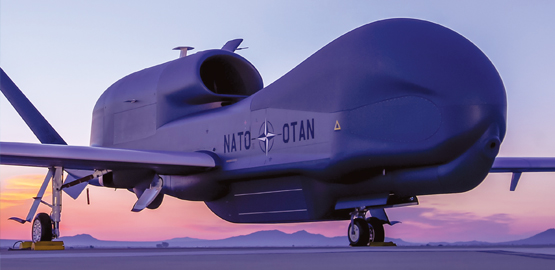
  • Exploring the potential to reduce emphasis on transferring advanced military capabilities to allies in lieu of providing such support on a temporary, or loan, basis.  Candidate capabilities would include the US global C4ISR, missile defense and high-fidelity training architectures, as well as advanced precision-strike munitions, both conventional and electronic.
  • Enlisting allied support to enable the United States to free the resources needed to transform the US military.  Such a transformation is necessary to ensure that US forces, working in conjunction with allied counterparts, will be capable of effectively countering the very different, and far more dangerous, military challenges likely to emerge over the long term (e.g., electronic defense, power-projection in an anti-access environment and space control).  Along these lines, allies should be encouraged to assume a greater role in peacekeeping and urban control operations, and to provide ground forces for near-term regional conflicts. This need not involve a major increase in the level of resources allocated to defense by US allies.  For example, South Korea should be capable of effectively defending itself without major US ground reinforcements.
  • Reducing existing US force structure and slowing traditional modernization programs to ensure that sufficient resources are available to cover the costs of transformation.  Again, these changes could increase the risk to US and allied security interests in the near term.  But by comparison with the Cold War and the kinds of threats likely to emerge over the long term, the risk incurred is likely to be quite modest.
  • Supporting the efforts of selected allies to develop advanced military capabilities.  For example, assistance might be provided to enable Australia, Israel, Japan, NATO Europe, and the Republic of Korea to develop their own anti-access forces, to include missile defense capabilities.  Great Britain might be supported in its efforts to create power-projection forces that can operate effectively against anti-access forces and, along with Australia and Japan, to create forces to frustrate multi-dimensional (i.e., land-, space- and sea-based) maritime commerce raiding and blockade.
  • Migrating toward a new global basing architecture as a means of: hedging against the likelihood that future alliance relationships will be less predictable than they have been over the past 50 years; countering the growing risks involved with traditional reliance on fixed, forward facilities; and recognizing that Asia, rather than Europe, will likely be the region where US security interests are at greatest risk.  Existing or prospective allies whose value as providers of forward basing facilities may increase substantially include Australia, Russia, and Turkey.