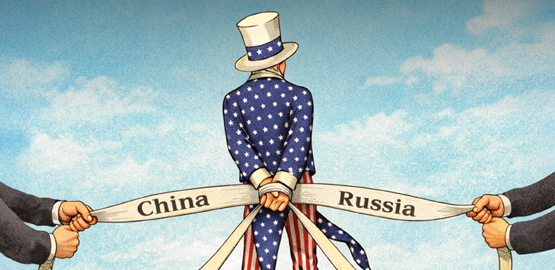
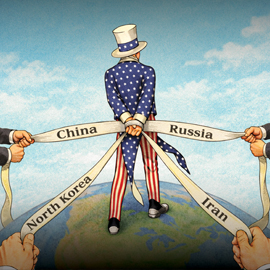







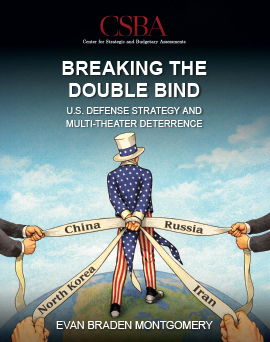
For years, the United States has tried to put China front and center, from the rebalance to more recent calls for prioritization. Yet it has never truly reconciled the limits of a one-major-war force with the reality of a multi-theater, multi-rival world—let alone a world in which U.S. rivals across different regions have growing incentives to support one another.
In Breaking the Double Bind: U.S. Defense Strategy and Multi-Theater Deterrence, CSBA’s Vice President for Research and Studies, Evan Montgomery, argues that the Pentagon should downgrade its emphasis on denial of a Taiwan invasion, along with its implicit reliance on rapid decisive battle against China as the key to addressing the risks posed by other adversaries. The ability to quickly and conclusively defeat the pacing threat might be an understandable goal, and the rationale that restoring overmatch will keep other rivals in check may be appealing. But the likely cost and duration of a conflict with Beijing are making this logic less tenable. Not only is rapid decisive battle becoming more difficult to achieve, but heavy losses in a denial campaign would decrement Washington’s ability to carry out a long fight and keep enough capability in reserve to manage the dangers of opportunism.
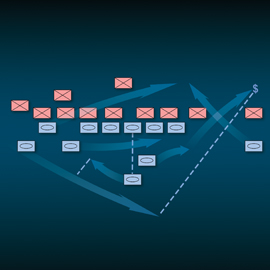
Instead, U.S. strategy toward China should embrace minimum essential denial and protracted punishment. This would entail raising the costs of a Chinese assault on Taiwan without elevating the defense of the island over the defeat of China, preparing to inflict a variety of costs on China over the course of a military campaign that might be longer and more geographically expansive than many anticipate, and preserving sufficientmilitary capability that could be used to impose costs on other adversaries should they engage in opportunistic aggression.