

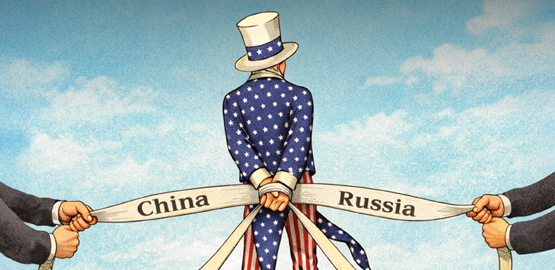
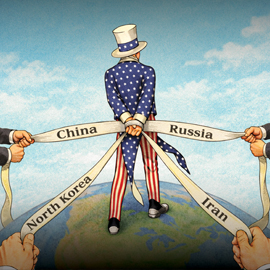










Since the collapse of the Soviet Union, the United States has enjoyed a period of military dominance that, with the exception of the brief period at the end of World War II, is unsurpassed in our country’s history. This has given America an opportunity presented to few countries in the course of recorded history: the opportunity to lead the way in creating the conditions for a long peace. But periods of extended military dominance are rare in history, and the current period will likely prove no exception. Nor can the US military’s current advantages be sustained by a business-as-usual approach to defense planning.
The Strategy for a Long Peace presented here does not seek a Pax Americana. Instead, it calls for the US military to transform itself to maintain a significant margin of superiority over any potential rival, while leveraging key alliance relationships to extend our current military advantage and, by extension, global stability.
The Future Security Environment
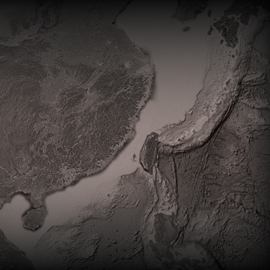
Defense planning today occurs in an atmosphere of relatively high uncertainty. Although history shows that dominant powers have typically encountered challenges to their position, it is not clear what state or group might pose such a challenge to America’s security, when that challenge might occur, or the form it will take. Several trends do, however, seem clear. One is that the sharp decline in competition among the great powers that followed the Soviet Union’s collapse has begun to reverse. Another trend concerns the rise of great regional powers in East and South Asia. This, combined with the dissolution of the Soviet empire and the promise of an increasingly integrated European Union (EU), makes it likely that Asia will displace Europe as the focal point of greatest economic (and military) potential—and of US security concerns.
We are also experiencing the emergence of a global economy more highly dependent upon access to information, space and fossil fuels. The free flow of commerce increasingly depends not only on free access to the world’s seas, but also to space and the electromagnetic spectrum. The development of major oil and natural gas resources in Central Asia also may find this remote area growing in geopolitical significance.
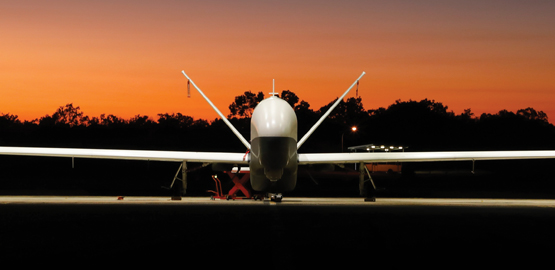
All this is occurring at a time when America increasingly finds itself leading coalitions of the willing, rather than relying on formal alliances, to conduct peacekeeping and other contingency operations around the world. Yet, at the same time, the United States will most likely find itself increasingly in need of durable and reliable allies. This will stem from the geopolitical and economic trends noted above. But it will also arise because an emerging military revolution (or revolution in military affairs (RMA)) will force the United States to divert increasing levels of resources to defending its homeland, and because sustaining America’s military advantage will require it to transform its military.