













A Strategy for a Long Peace PDF Thumbnail

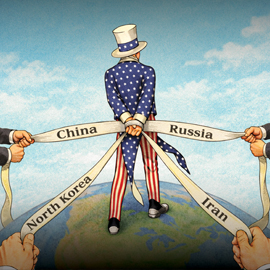
This would be bad news—if the current defense program offered the best way to address America’s security needs. But it does not. The current defense program focuses much of its efforts on creating and sustaining forces that are ready and capable of waging large-scale warfare in two separate theaters in overlapping time frames. This two-Major Theater War (MTW) posture that drives a good portion of US readiness and force structure requirements is an increasingly poor metric by which to gauge the effectiveness of our defense strategy and program. Today’s Iraqi threat is far smaller in scale than that posed in 1991. As for Iran and North Korea, the threats they pose are centered more around embryonic anti-access/area-denial capabilities than on attempts to create their version of a large Republican Guard-like mechanized, heavy land force, or a poor-man’s version of the US Air Force. In short, the kind, or form, of the challenge presented by these rogue states is different from the threat posed by Iraq during the Gulf War. Thus even the Defense Department’s excessive emphasis on minimizing the near-term risks to America’s security is being accomplished in a relatively ineffective manner.

The same can be said of forward-presence operations, the other major generator of US near-term force requirements. The use of Cold War era metrics, such as the number of carrier battle groups and amphibious ready groups forward deployed, still dominate—this, even though other, lower-cost, means of providing effective forward presence are now available.

Of perhaps greatest concern, however, is that the current defense modernization program places far too heavy an emphasis on sustaining an improved version of today’s military—as opposed to a transformed military—as the best means for maintaining US military advantages over the long term.

Military Transformation

If one concurs with the authors’ diagnosis of the emerging security environment, the following strategy offers one approach for dealing with it effectively. This strategy employs a range of means to support transformation within projected resource constraints, while also incurring minimal increased risk to near-term US security interests, and addressing the substantial mismatch between the QDR defense program and the budgets projected to sustain it.

Transforming the US military is at the core of our Strategy for a Long Peace. Transformation requires a broad approach, comprising six elements:

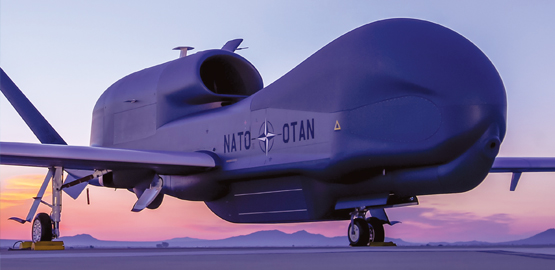
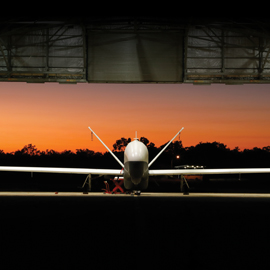
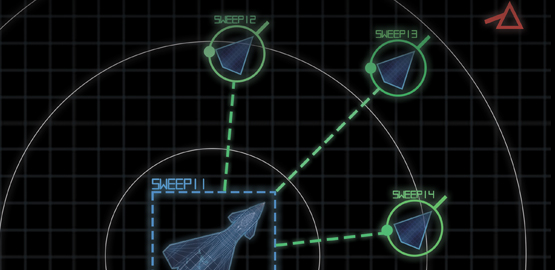
* A future warfare vision that will impart direction to transformation efforts. This vision would focus the military on key emerging challenges, such as power projection in an anti-access/area-denial environment, urban eviction and control, space and information control, and homeland defense, and would explicitly anticipate greater future reliance on extended-range power projection, network-based forces, stealth, and unmanned systems.

* Selection of senior leaders based on their ability to effect transformational change. An ability to lead transformation efforts should be a central criterion for selection as JCS Chairman and Vice Chairman, and Service chiefs and vice chiefs.

* Robust funding for leap-ahead technologies and sustained experimentation. To create a portfolio of real transformation options, several billion dollars will need to be added to the science and technology (S&T) accounts over the Future Years Defense Program (FYDP). Among the technologies that should be aggressively pursued are those for distributed, micro-satellite constellations; space-based radars with moving target indicator capabilities; unmanned systems, to include micro-robots and micro-UAVs; performance-enhancing exoskeletons; next-generation stealth, including applications to air mobility aircraft, surface naval vessels and ground combat systems; hypersonics and directed-energy systems; and micro-proximity satellites for space control. To identify the proper mix of new systems incorporating the above characteristics, and the number of legacy systems required to meet emerging challenges, an ongoing series of Service and Joint transformation exercises must be conducted, oriented principally at the operational level of warfare. To this end, a Joint National Anti-Access/Area-Denial Training Center should be established, along with a Joint Urban Warfare Training Center. The military services should establish standing opposing forces at these centers, which can be brought together under Joint Forces Command to form a Joint Opposing Force.