




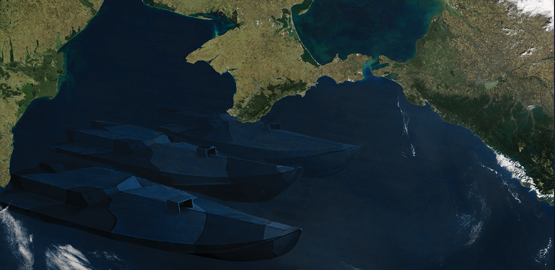
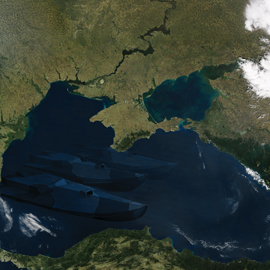






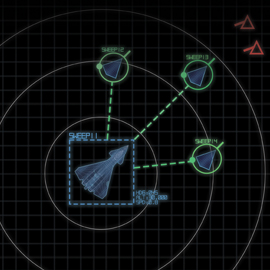
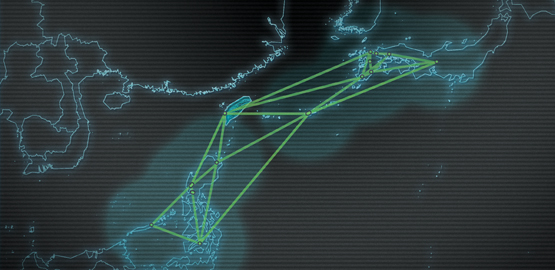

Restructuring Forward Presence. The Navy should make use of the growing strike capability of its submarine forces and surface combatants to create innovative forward-presence force packages, to include the use of Surface Action Groups (SAGs) and cruise missile submarine (SSGN) Stealth Battleships. Accordingly, the four Trident ballistic missile submarines (SSBNs) scheduled to come out of the nuclear deterrent force should be converted to SSGN conventional strike platforms. Air Expeditionary Forces should be used to gap maritime forces, as appropriate. Those NATO allies with sizeable maritime forces should be encouraged to take on a greater role in conducting maritime forward-presence operations in the Mediterranean Sea, enabling US maritime forces to reorient themselves more toward the Persian Gulf, South Asia and East Asia. These initiatives will reduce the stress on carrier battle groups and amphibious ready groups, while enabling the transformation of US maritime forces.
Enhanced Peacekeeping. The Army should orient a significant part of its force structure—six so-called interim brigades—to peacekeeping operations, along with a like number of National Guard brigades, in recognition that such operations are likely to represent an enduring requirement. Efforts also should be made to support the peacekeeping forces fielded by America’s allies—such as Australia and Canada—which play an important role in policing democracy’s empire.
The Strategy for a Long Peace also provides increased funding on a per troop basis over that which is currently projected to ensure that US forces maintain themselves at acceptable levels of readiness.
Military Service Transformation Initiatives
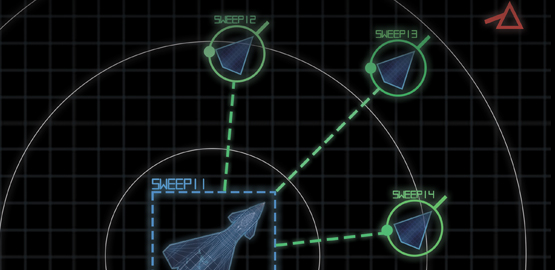
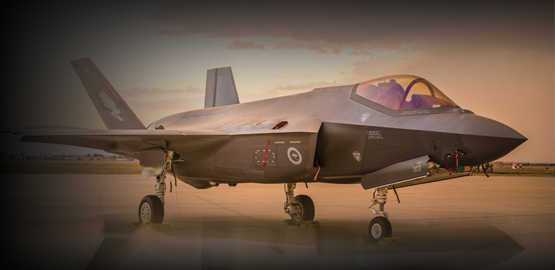
The Strategy for a Long Peace emphasizes developing forces that can best meet the types of emerging challenges noted above. This means forces that can strike with precision from extended range; incorporate stealth into their design; emphasize mobility vice armor for defense; form part of a robust, comprehensive command, control, communications, computers, intelligence, surveillance and reconnaissance (C4ISR) architecture; are capable of defending themselves against a range of electronic and information attacks; avoid reliance on large, vulnerable fixed bases for insertion or sustainment; and avoid overly concentrating combat power in a few platforms.