










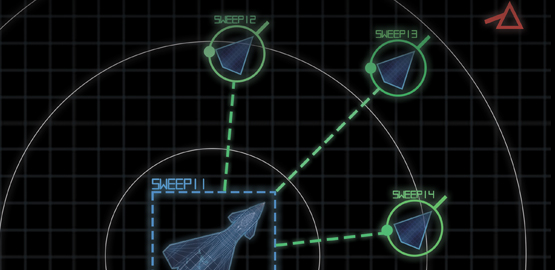

The Army should proceed with its current transformation effort, but it should be modified to better address emerging threats, as well as existing requirements. This means earmarking one division (and associated National Guard units) to conduct field exercises oriented on solving the anti-access challenge, developing an advanced capability to conduct urban control and eviction operations, and exploiting the potential of ground forces to see deep and engage at extended ranges. Within this framework, the Army should proceed with its Future Combat System (FCS), high mobility artillery rocket system (HIMARS) lightweight missile launcher, and the Army tactical missile system (ATACMS) Block IIA missile, and accelerate efforts to develop unmanned combat vehicles, and other forms of robotics. The Service’s mobility requirements should be supported through research and development (R&D) of an Advanced Technology Transport (ATT), Quad-Tilt Rotor (QTR) transport, stealthy air transport for use by special operations forces, and rapid, over-the-beach sealift. The Crusader artillery system does not fit the transformation force characteristic profile and should be terminated.
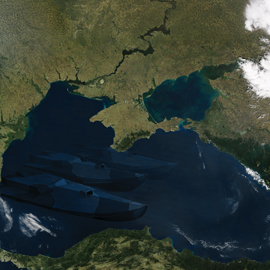
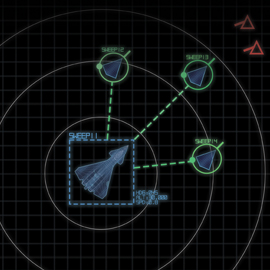
Navy and Marine Corps Fleet Battle Exercises should be mainstreamed into ongoing fleet training to explore the potential of new means and new forms of operation to deal with anti-access/area-denial threats. To this end, the two Services should accelerate their efforts to determine the utility of the Streetfighter concept, Network-Centric Warfare, and Operational Maneuver From the Sea. The Navy should develop and purchase a small number of Streetfighter combatants and convert four Trident SSBNs to SSGNs, while continuing to develop the CVX and DD-21. New means of conducting strikes at extended ranges, to include the advanced gun system (AGS) and unmanned combat air vehicles (UCAVs), should be accelerated. To maintain an adequate undersea warfare capability, Los Angeles-Class submarines scheduled to be retired before the end of their useful lives should be refueled and retained in the fleet. A Joint Mobile Offshore Base (JMOB) prototype should be deployed to determine its utility as an alternative to increasingly vulnerable fixed, forward bases.
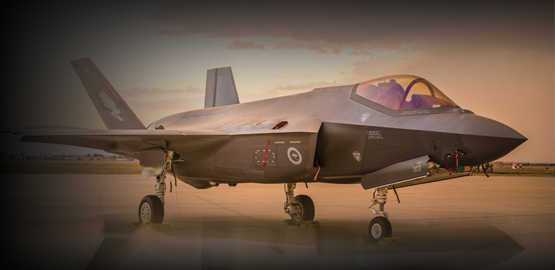
Reflecting the demands of an anti-access/area-denial warfighting environment, the Marine Corps should proceed with its MV-22 buy, but significantly reduce its purchase of the advanced amphibious assault vehicle (AAAV). Similarly, the Joint Strike Fighter (JSF) should be cancelled, with any near-term shortfall in aircraft production gapped by the F/A-18E/F (for the Navy and perhaps, the Marine Corps) and F-16 Block 60 (for the Air Force). Alternate means of survivable strike support—to include land- and sea-based missile forces and UCAVs—should receive increased emphasis.
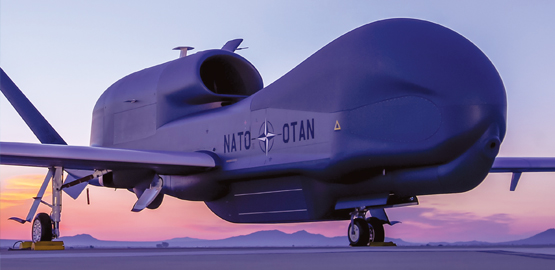
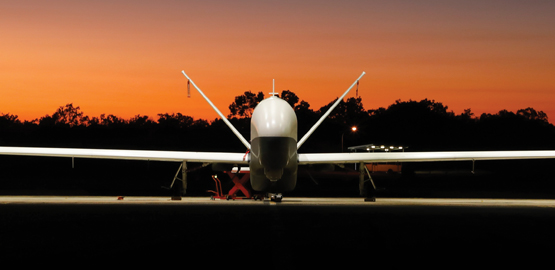
The Air Force should accelerate its efforts to insure that the US military will dominate any future military competition in space and along the electromagnetic spectrum. Both challenges promise to be daunting, given the difficulty in identifying where the greatest threats may emerge, and how they might manifest themselves. The Service also needs to emphasize efforts to deal with the anti-access/area-denial challenge. The Air Force should accelerate its efforts to develop extended-range, long-endurance unmanned aerial vehicles (UAVs) and UCAVs. Congress should be petitioned to restore funding for the Discoverer II prototype radar satellites. The Service’s long-range, precision-strike systems will likely play an increasingly important role in future operations. At present, the B-2 bomber is the Air Force’s only long-range, stealthy, penetrating strike asset and, as such, an important hedge against the growing vulnerability of forward-based aircraft. Service and Joint exercises should accord high priority to assessing the B-2’s considerable potential for addressing the anti-access challenge. If these exercises confirm this potential, the B-2 production line should be restarted and significant additional numbers of the aircraft procured. Unless the Air Force can demonstrate that the F-22 is both critical and survivable in the emerging anti-access/area-denial warfighting environment, its procurement should be limited to fielding a silver-bullet force.