








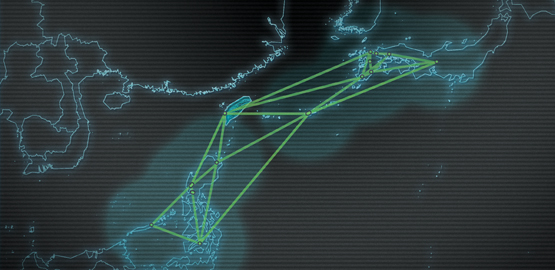

- Evolving anti-access and area-denial capabilities versus current and new forms of power projection;
- Increased capabilities for preemption versus increased denial capabilities;
- Hiders versus finders;
- Space access versus space control;
- Missile attack versus missile defense, information warfare (IW) attack versus IW defense, and biological warfare (BW) attack versus BW defense; and
- Increased capabilities for political–military coercion versus capabilities for counter–coercion.
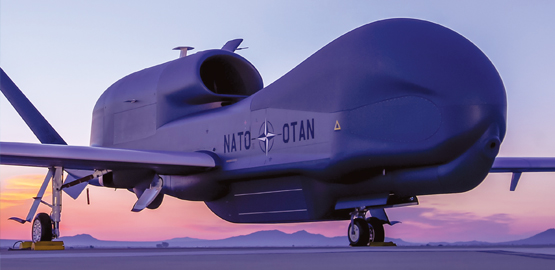
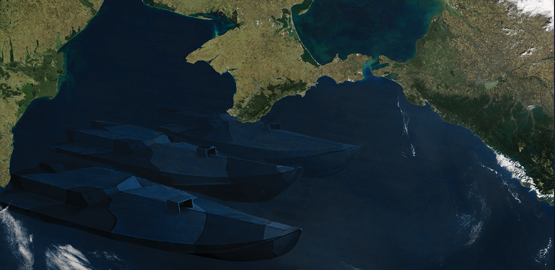
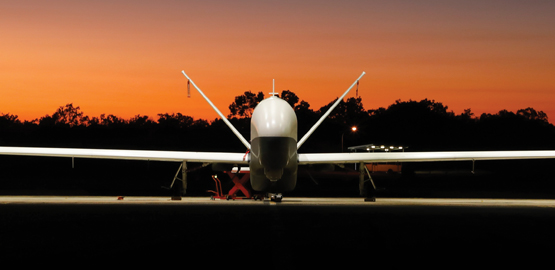
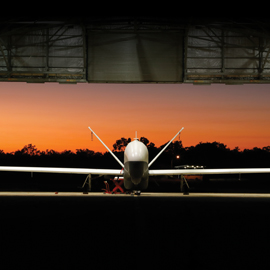
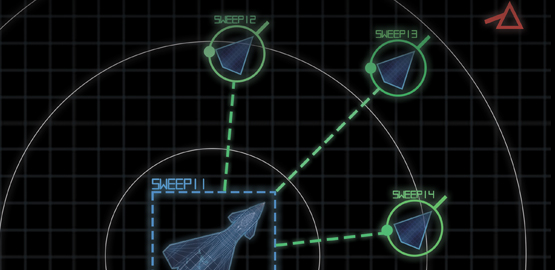
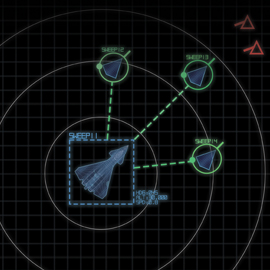
As these key warfare competitions unfold, discontinuous change could occur within and across the primary warfare dimensions of air, land and sea. New forms of war could emerge in several other dimensions: space, information, and the biological. Air warfare could be transformed from a regime dominated by manned, theater-range, air superiority aircraft to one dominated by extended- range, unmanned, and stealthy platforms. The conduct of land warfare could shift from a regime dominated by mobile, combined-arms, armored forces to one that is dominated by much lighter, stealthier and information-intensive forces that make heavy use of robotics. War at sea could be transformed by the emergence of “anti-navy” capabilities that allow nations to assert a degree of surface control over adjacent maritime areas out to several hundred miles. This development would likely lead to new forms of naval power projection, including increased reliance on undersea warfare and relatively small, stealthy, networked surface vessels.
Increased commercial and military use of space could lead to the emergence of a wide range of offensive and defensive space control capabilities. Computer network attack (CNA) tools and radiofrequency (RF) weapons could be widely used to attack information infrastructures and information-intensive forces. Designer BW and the emergence of biological operations could also figure prominently in an
advanced revolution in military affairs (RMA) regime.