







Introduction
Thank you, Mr. Chairman, for the opportunity to appear before you today, and to share my views on the future of U.S. Ground Forces. As we begin a new administration, we are sobered by the security challenges that have emerged in recent years: the attacks of 9/11; the deployment of U.S. troops to Iraq and Afghanistan; the erosion of barriers to nuclear proliferation; and the rapid rise of China and resurgence of Russia. Not surprisingly, there is considerable interest in what this portends for the U.S. military in general and our ground forces in particular.
Of course, any detailed discussion of how our ground forces might best be organized, structured, trained and equipped to meet the challenges of a rapidly changing security environment should be informed by a sound national security strategy. Anything less would be putting the cart before the horse. The Obama administration has a strategy review under way. This review stands to be the most important review since the Cold War’s end.
My testimony is focused primarily on the Army, given the dominant position it holds in providing ground forces for our country.1
The National Security Challenges Facing the Army
The three challenges confronting the U.S. military today—the war against Islamist terrorist elements, the prospect of nuclear-armed rogue states, and the potential rise of China as a military rival—differ greatly from those confronted during the Cold War era. Nor do they resemble the threats planned for in the immediate post-Cold War era, when minor powers like Iran, Iraq and North Korea which lacked weapons of mass destruction and were assumed to present challenges not all that different from Iraq during the First Gulf War. Nevertheless, this assumption led the U.S. military to focus its attention on waging two such conflicts in overlapping time frames from 1991 until the 9/11 attacks. 2
For the Army, these new challenges all suggest the onset of an era of persistent, irregular conflict. The wars in Afghanistan and Iraq show no signs of ending soon. The same can be said regarding the war against Islamist terrorist groups operating around the globe. Moreover, the rising youth bulge in Africa, the Middle East, Central and South Asia, and in parts of Latin America only promises to increase the strain on governments in these regions, increasing the prospect for further instability and even state failure. As unprecedented numbers of young people in these parts of the world come of age, they will find themselves competing in a global economy in which they are hampered by a lack of education and burdened by corrupt and incompetent governments. The communications revolution will enable radical groups to influence large numbers of these young adults, and attempt to recruit them. Even if radical elements succeed in winning.
Over only 1 percent of the young as they rise to adulthood, they will have recruited millions to their cause. For much of history, large numbers of people were required to cause disruption and destruction. Yet as groups like Aum Shinrikyo,3 al Qaeda, and Hezbollah have shown, thanks to the advent and spread of highly destructive technologies even small groups can create widespread disorder.
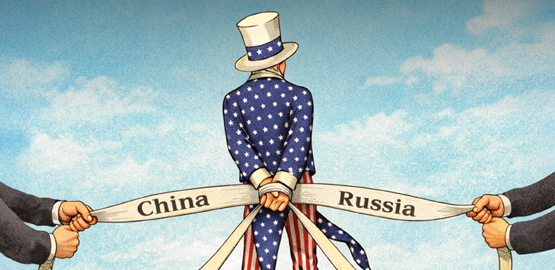
It does not end there. Should minor powers hostile to the United States, such as Iran, acquire nuclear weapons, they will likely feel emboldened to take greater risks in backing groups pursuing ambiguous forms of aggression. In Iran’s case, this could lead to greater support for radical groups like Hamas, Hezbollah, and the Mahdi Army, as well as others. If the United States is unable to convince China to abandon its attempts to exclude the U.S. military from East Asia and to threaten America’s access to the global commons, the competition could spill over into irregular proxy wars in developing nations. China could pursue this path both in an attempt to tie the United States down in costly, protracted conflicts, and to position itself to secure access to important or scarce raw materials.
2 The two major regional conflict (MRC) posture was succeeded by the two major theater war (MTW) and major combat operations (MCO) postures, which essentially represented variations on the same theme: regional wars against minor powers in the Persian Gulf and Northeast Asia. The U.S. force posture did not begin to change significantly until after the 9/11 attacks and the onset of the wars in Afghanistan and Iraq.
3 On March 20, 1995, members of a Japanese cult, Aum Shinrikyo, released sarin nerve gas in a coordinated attack on five trains in the Tokyo subway system. Although the attack was botched, 12 commuters were killed and 54 seriously injured, while nearly 1,000 more people suffered some ill effects. Kyle B. Olson, “Aum Shinrikyo: Once and Future Threat?” Centers for Disease Control, accessed at http://www.cdc.gov/ncidod/eid/vol5no4/olson.htm, on March 21. 2009.