
















Reshaping America’s Alliances for the Long Haul PDF Thumbnail

America’s Asian Alliances and the Rise of China

Although the rise of China may ultimately be peaceful, the United States must be prepared for the possibility that Beijing will become a more hostile power, whether as the result of international conflicts of interest or internal instability leading to external aggression. In doing so, America’s allies and partners in the region will play a critical role by helping to shape the trajectory of China’s rise, dissuading aggressive behavior on its part, and checking Chinese aggression if necessary.

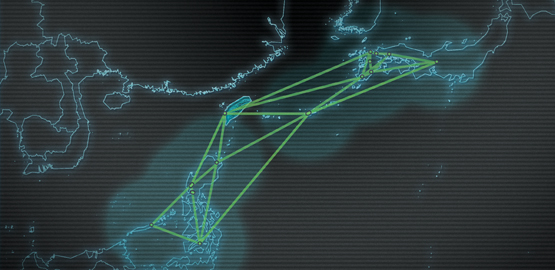
Specifically, the United States should continue its current strategy of strengthening and building closer relationships with nations in the region, in particular Japan, Australia, and India, all of which can serve as potential counterweights to China both individually and in concert with the United States. While cooperation with Japan should focus on the continued development and deployment of ballistic missile defense systems, the United States should also explore the possibility of new access agreements and even basing options in Australia, and should support India’s efforts to develop an increased blue water naval capability that could balance future Chinese efforts to project maritime power into the Indian Ocean.

In addition to strengthening bilateral ties with these and other nations in the region,
the United States should encourage closer bilateral and multilateral ties among its allies, to include joint military exercises in areas such as counterterrorism, counterinsurgency, maritime security, noncombatant evacuation operations, and disaster relief. By working more closely with its regional partners and fostering greater cooperation between them, the United States can retain and perhaps expand its influence with these nations, increase interoperability between their forces and those of the US military, and improve the prospects of US allies and partners balancing against rather than bandwagoning with China if it becomes hostile.

Meeting the Challenge of Nuclear Proliferation

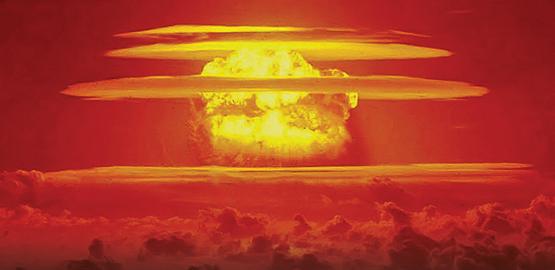
Further nuclear proliferation could create a number of strategic and operational dilemmas for the United States, but the increased possibility of conducting military operations against a nuclear-armed opponent, the increased chance that terrorists might acquire and use a nuclear weapon, and the prospect of a proliferation “chain reaction” in the Middle East stand out as the three most worrisome potential  developments.

Unfortunately, when preparing to address the first of these dilemmas, the United States must be prepared to act without much support from other nations, as allies facing the possibility of a nuclear reprisal are unlikely to consent to the use of their territory for military operations, which is perhaps the most critical contribution they could make. To address the threat of nuclear terrorism, however, allied support will be crucial. Not only must the United States work as closely as possible with  Russia and Pakistan to ensure the security of their nuclear weapons and fissile material stockpiles, it should collaborate with its allies in the Middle East to delegitimize mass casualty (and especially nuclear) terrorist attacks, and may also wish to consider undertaking the necessary training, joint exercises, and technology transfers that would allow nations such as Britain, France, Australia, Singapore, and possibly others to reliably interdict and render safe a stolen or improvised nuclear device. Finally, preventing a spiral of proliferation in the Middle East will be a critical goal if Iran’s nuclear program continues to progress, and especially if Tehran develops nuclear weapons.

This raises the possibility of the most significant expansion of US alliance obligations since the start of the Cold War, namely, committing to retaliate against Iran for an attack on its neighbors to dissuade the latter from pursuing nuclear weapons. Although this could ultimately be the best or only way to convince Iran’s neighbors to forgo nuclear weapons, this option should not be pursued until it has been studied in depth.