










The War in Afghanistan in Strategic Context PDF Thumbnail

Matters of Concern

Given the preceding discussion, the Obama Administration’s ongoing strategy re-deliberation seems counterproductive. To be sure, any strategy merits adjustment as circumstances dictate; however, from General McChrystal’s report and his request it appears the strategy has yet to be fully implemented, making its effectiveness difficult if not impossible to evaluate. To be sure, one might question the strategy’s prospective efficacy if circumstances had changed radically since March in ways that invalidated the strategy’s key assumptions. This does not appear to be the case. While we rightly deplore the Karzai government’s blemished record when it comes to honest governance, it is hardly news that the political process in Afghanistan has been characterized by corruption almost since its inception. Thus the principal effect of this temporizing may be to raise doubts on our reliability in the minds of our Afghan and Pakistani allies.

This would be both unfortunate and ironic, as it has the unintended effect of undermining our ability to achieve important war objectives. If we seek to improve Afghan governance, the less confidence Karzai has in our reliability, the more compelled he will feel to engage in patronage and corrupt activities with his country’s power brokers. Similarly, if we intend to convince the Pakistanis that they should end their support for the Taliban as their hedge against our abandoning the field in Afghanistan and the rise of India’s influence in that country, then we must convince them that we are willing to sustain our role as the principal external power in Afghanistan.

In arriving at a decision on General McChrystal’s request, President Obama should avoid the temptation to pursue incrementalism, or to commit forces piecemeal. This approach typically offers defeat on the installment plan. Instead, the president should send a force that is capable of executing his strategy and his field commander’s campaign plan.

Finally, there is the matter of an alternative strategy advanced in various forms by analysts across the political spectrum, emphasizing over‐the‐horizon air strikes, Special Forces raids and other forms of covert actions against terrorist targets. This strategy would abandon efforts to stabilize Afghanistan and withdraw nearly all our forces from that country.

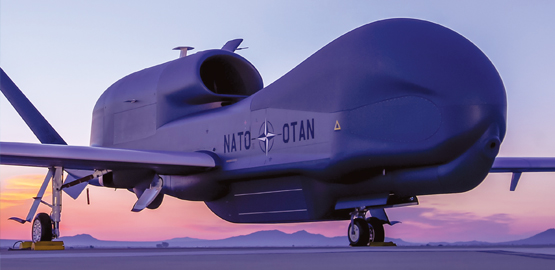
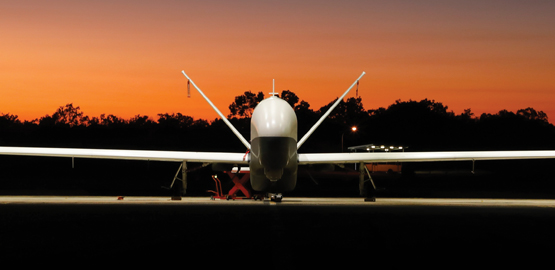
There is little evidence to suggest that this “whack-a-mole” strategy—the current term of art—would succeed. It has been tried before, and it has been found wanting. In Vietnam it went by the name “search and destroy”: success was to be achieved by locating enemy forces and killing as many as possible. We experienced it again with what some called “therapeutic bombing” or “antiseptic warfare” in the period leading up to 9/11, when cruise missile strikes were conducted against al Qaeda sanctuaries in Afghanistan. It reappeared yet again in Iraq as a “whack-a-mole” approach in the period before our forces began conducting a national counterinsurgency campaign during the Surge. Recently, we have employed Special Forces and drone (i.e., unmanned aerial vehicle) strikes against enemy leaders in Afghanistan and Pakistan. Many have been killed. Yet, as in Vietnam, this attempt to succeed by generating a “body count” of enemy leaders has not prevented our position from deteriorating.

There is a good reason for this. As we have seen in the past, the air strikes and raids associated with this strategy inevitably produce casualties among innocent civilians because of inherent limitations in the quality and timeliness of intelligence. Consequently, such strikes often produce more insurgents from the alienation it produces among the local populations than they yield in terms of radicals killed. To place such operations at the center of our strategy will likely condemn us to an open-ended—and unsuccessful—military campaign.