










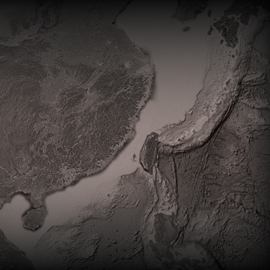
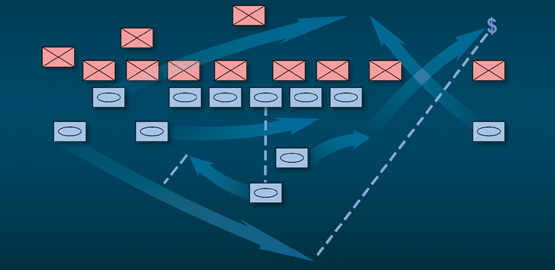
Four of the five declared nuclear powers during the First Nuclear Regime, which extended from 1945 to roughly the end of the Cold War, were part of the Western world. The Second Nuclear Regime, which succeeded it, finds proliferation moving from a world dominated by advanced industrial powers centered in Europe and America to Third World Asian states (i.e., India, Pakistan, North Korea), with more Asian states (i.e., Iran, Algeria, Egypt, Saudi Arabia, Syria and Turkey) positioning themselves to follow. An Iranian nuclear capability could trigger a cascade of proliferation in the volatile Middle East, creating an n-player competition. if so, it will be essential to develop an understanding of the way in which the leaders of very different cultures (e.g. Hindu, Muslim) view nuclear weapons, and the conditions under which they would be used. To date the United States has not devoted anything approaching the level of intellectual effort to this matter that it did to understanding Soviet views on nuclear forces during the Cold War. Such an effort is necessary to craft an effective US strategy with respect to nuclear forces. Furthermore, in a multipolar nuclear world there is the prospect that defenses fielded to address one threat may affect the calculations of other rivals in undesirable ways. These second-order effects are likely to be far more pervasive, and more significant, than was the case during the First Nuclear Regime.
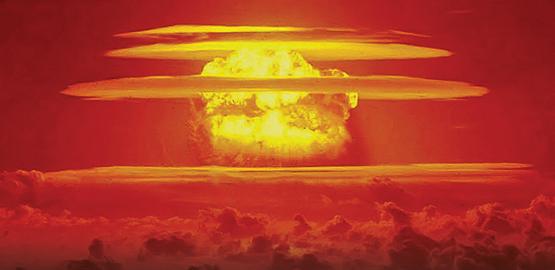
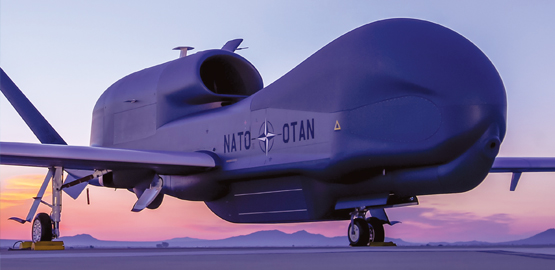
The US military’s fielding of what is viewed by some expert observers as a nonnuclear strategic strike capability has blurred the distinction between nuclear and non-nuclear weapons. The special status that nuclear weapons have traditionally held may be further compromised with the development of cyber weapons, which are capable of disabling, quickly and (arguably) reliably, certain kinds of strategic targets, such as electric grids. Yet while these weapons complicate thinking about strategic strike operations and the role of nuclear weapons, neither of them can, individually or in combination, displace nuclear weapons’ terrible ability to create prompt destruction and loss of life on a massive scale with a single, highly deliverable package. in a world where technology is displacing so much of what came before, including weapons of war, nuclear weapons continue to cast a long shadow over humankind, and are almost certain to do so for the indefinite future.
it may be that deterrence, the cornerstone of US nuclear strategy during the First Nuclear Regime, will retain its importance in a more proliferated world. On the other hand, deterrence is based, to a significant extent, on the premise that it is possible to identify promptly the source of an attack, a condition that may be increasingly difficult to meet. Deterrence also assumes an understanding of a rival’s sense of costs and benefits,and what he fears. This assumption may not prove out in the case of newly armed nuclear powers. it may be that leaders of the newly armed nuclear states do not calculate costs and benefits in a manner similar to that of the United States. These leaders’ thinking may be driven by other factors as well—domestic instability, historical rivalries, economic deprivation, etc.—any of which could make their views on the utility of nuclear weapons significantly,and perhaps markedly, different from those of US policy makers. in short, deterrence could play a much reduced role in a proliferated world, while the prospect of nuclear use, defenses against nuclear attack, war termination strategies, and post-war considerations assume greater importance in defense strategy and planning.
The Second Nuclear Regime emerged thanks in no small measure to the existence of a market for nuclear weapons technology. Early in the First Nuclear Regime, technology was acquired, to a great extent, by theft, typically through the efforts of spies, but also by willing transfer. While it appears that neither weapons-grade fissile material nor nuclear weapons themselves have been transferred from one country to another, there are concerns that such a direct market for nuclear weapons could be established, especially given the character of the North Korean regime and Iran’s apparent drive to become a nuclear-capable (if not nuclear-armed) state. potentially of even greater concern is the prospect that Saudi Arabia may seek nuclear weapons should Iran become a nuclear power. Given their country’s central role as an exporter of oil to the global economy, should the Saudis choose to purchase a nuclear arsenal it may be difficult for the United States, or other countries, to impose economic sanctions against it, let alone attempt to reverse the act through the use of force. Should such a situation obtain, it could pave the way for an open, and greatly expanded, nuclear arms market, possibly involving the transfer of nuclear weapons themselves.