



Hence the United States’ strategic choice: to risk a loss of military access to areas vital to its security — and those of key allies and partners to whom it is committed by treaty or law — or to explore options that can preserve the stable military balance that has seen the region enjoy a period of unparalleled peace and prosperity.
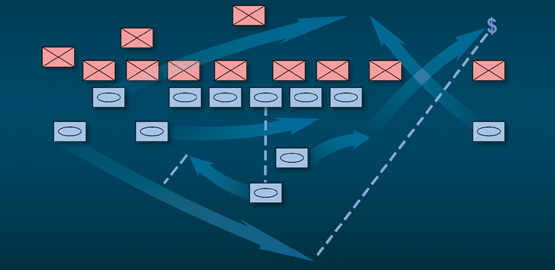
Recently the United States Air Force and Navy agreed to address the issue. Both Service chiefs are committed to pursuing a new operational concept called AirSea Battle which appears designed to assess how US power-projection capabilities can be preserved in the face of growing anti-access/area-denial challenges, to include the most formidable challenge, which is posed by the Chinese military.
This is not to suggest that the United States seeks a confrontation with China, let alone a war. Indeed, even during the period of unparalleled US military dominance following the Cold War, the United States sought to engage China, not attack or coerce it. A “roll-back” of the PLA’s military power is not the objective here. Nor is containment of China proposed. Rather, we advocate simply offsetting the PLA’s unprovoked and unwarranted military buildup. Doing so requires an examination of how the US military might minimize Beijing’s incentives to achieve its geopolitical ambitions through aggression or, more likely, coercion. This requires that the US military sustain its ability to project sufficient power in the region to defend US interests and protect its friends and allies. This is the key to maintaining the stable military balance that has preserved the peace in the Western Pacific.
What Should An AirSea Battle Concept do?
An AirSea Battle concept first and foremost must address high-end military operations in the WPTO. To be sure, some of the specific initiatives deriving from a viable concept likely would be applicable elsewhere against other A2/AD capable adversaries, just as the Army and Air Force employed AirLand Battle principles designed to deter the Soviet Union in Central Europe very successfully in both Gulf Wars. However, just as the Soviet Union represented the most severe challenge to the US Army and Air Force during the Cold War, today the PLA represents by far the most serious A2/AD challenge to the Air Force and Navy.
As a doctrine for the operational level of war, AirSea Battle should not be seen as a “war-winning” concept in itself. Nor should it be viewed through the lens of a particular scenario, for example, the defense of Taiwan. Instead, it should be considered as helping to set the conditions at the operational level to sustain a stable, favorable conventional military balance throughout the Western Pacific region. This means maintaining an ability to deter China from acts of aggression or coercion in that region and, if necessary, to respond effectively in the event deterrence fails.
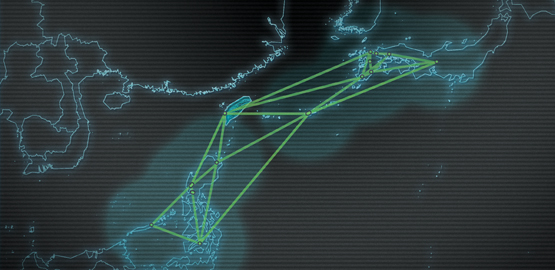
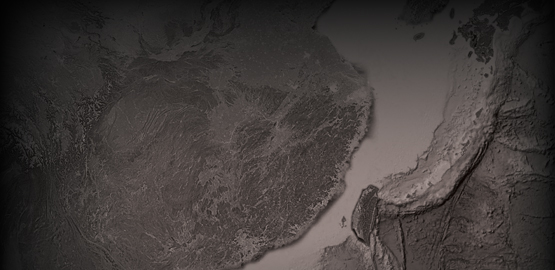
AirSea Battle must support overall US strategy for preserving stability in the WPTO. It must address the critical emerging challenges and opportunities that the PLA’s projected A2/AD capabilities will present, and to which currently envisioned US forces do not appear to offer a suitable response. It must account for the WPTO’s geophysical features, particularly its vast distances compared to Europe or the Persian Gulf region and the scarcity of US forward bases, which comprise a small number of very large and effectively undefended sites located on a handful of isolated islands, all within range of the PLA’s rapidly growing missile forces and other strike systems.
AirSea Battle must account for geostrategic factors, such as US treaty and legal obligations to defend formal allies and friends in the region, as well. Even more importantly, AirSea Battle is not a US-only concept. Allies such as Japan and Australia, and possibly others, must play important enabling roles in sustaining a stable military balance.
