









The Substance of An AirSea Battle Concept
Our candidate AirSea Battle operational concept describes a WPTO military campaign against the challenge described above, to include its principal components, required missions and tasks, how these would be accomplished, and by what forces. Its successful execution would depend on myriad factors, to include the active and substantial participation of key allies and partners, and the Defense Department’s ability to make significant changes in its program of record.
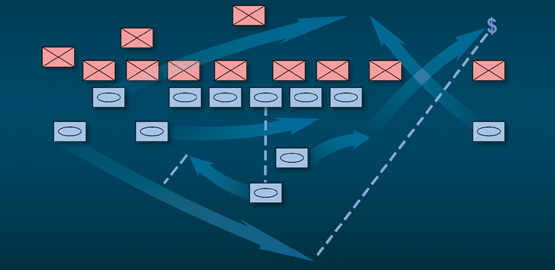
The AirSea Battle campaign has two stages. The initial stage, commencing with the outbreak of hostilities, comprises four distinct lines of operation:
- Withstanding the initial attack and limiting damage to US and allied forces and bases;
- Executing a blinding campaign against PLA battle networks;
- Executing a suppression campaign against PLA long-range ISR and strike systems;
- Seizing and sustaining the initiative in the air, sea, space and cyber domains.
These lines of operation and their key sub-components have differing execution timelines. While some would unfold in parallel, the initiation of others would depend on progress being made in other aspects of the campaign. Many forces and capabilities would be in high demand across multiple lines of operation, forcing tough decisions regarding their employment.
The follow-on second stage would comprise various operations designed to support US strategy by creating options to resolve a prolonged conventional conflict on favorable terms. These would include:
- Executing a protracted campaign that includes sustaining and exploiting the initiative in various domains;
- Conducting “distant blockade” operations;
- Sustaining operational logistics; and
- Ramping up industrial production (especially precision-guided munitions).
There would not necessarily be a clean break between stages. Some follow-on operations would simply be continuations of those already ongoing. Nor would there be a clear temporal distinction between stages, in that certain second-stage operations may be conducted while first-stage operations are under way.
Candidate AirSea Battle Initiatives
Neither the Defense Department’s Program of Record forces and modernization profile, nor current Air Force and Navy concepts of operations accord sufficient weight to the capabilities needed to execute an AirSea Battle campaign successfully along the lines of the one described in this report. This report recommends multiple initiatives the Air Force and the Navy should undertake, mostly on a dual-Service basis, to field the necessary forces and capabilities for AirSea Battle. These include initiatives on:
- Mitigating the missile threat to Guam and other selected bases, and to maritime forces;
- Correcting the PLA-US imbalance in long-range strike for high-value and/or time-sensitive targets, to include developing and fielding greater penetrating and stand-off long-range ISR and precision strike capabilities and capacities;
- Enhancing capabilities for undersea operations, to include submarines, submersible robotic systems, and mines;
- Offsetting the vulnerabilities of space-based C2, communications, and ISR capabilities and capacities, to include fielding high-capacity airborne C3 relay networks to back up space-based systems;
- Emphasizing future standardization and interoperability of data links, data structures, and C2 and ISR infrastructures;
- Increasing emphasis on and investment in cross-Service electronic warfare capabilities and capacities;
- Enhancing cyber warfare offensive and defensive capabilities; and
- Developing and fielding directed-energy weapons.
