



















Understanding America’s Contested Primacy PDF Thumbnail

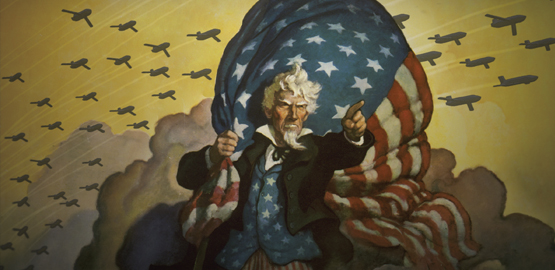
Primacy both allows the state to advance its own specific policy objectives and gives it greater freedom of action in the pursuit of those ends. Throughout most of the twentieth century American presidents have considered it to be in the US interest to seek a “liberal world order” comprised of an international economic system characterized by openness, free trade and free flows of investment, and an international political arrangement characterized by a growing number of liberal democratic states. The theory behind the continued adherence to a strategy of maintaining primacy has been that only the security provided by a strong power or group of powers can underpin the liberal economic and political order that is conducive to economic growth, representative government and international peace and prosperity. Since the end of the Cold War this view has had consistent bipartisan support.

Although the point remains controversial it seems apparent that America, while clearly creating some resentments with its policies, continues to be seen (particularly by governments) as relatively benign in its interactions with other powers. America shares a fundamental view of the world rooted in the neo-liberal orthodoxy of free markets, open societies, and democratic institutions that emerged as a consensus prescription for peace and prosperity after the collapse of communism. This “transnational liberalism” inclines national elites to see a broad confluence of interest with the United States and reduces their tendency to try and counterbalance American power. As the guarantor of the international world economy and a provider of security and stability because of its alliance system, the United States provides global public goods which others cannot provide.

Accepting the new conventional wisdom of decline and an end of US primacy could well lead to an alteration of the strategic underpinnings of American global policy and could become a self-fulfilling prophecy.

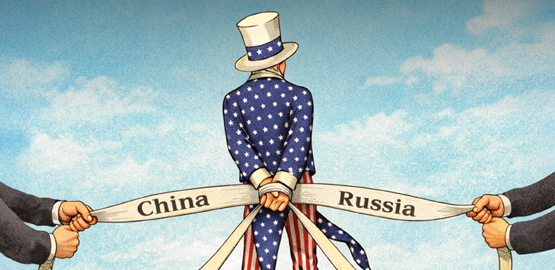
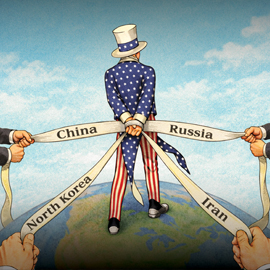
A rigorous assessment should consider the strengths and weaknesses of the United States’ putative competitors on the global scene as well as the enduring strengths and sources of resilience that have enabled America to extend its primacy and maintain a stabilizing, global hegemonic role against all expectations. There is a need for a framework to inform how US policymakers might think about the problem of developing strategies and policies to extend that role yet again, since it is at least an arguable proposition that rather than a multipolar world, the global system, after the current Great Recession passes, will continue to be unipolar but with some additional challenges for US leadership.

The 2008 NIC report reflected a wave of “declinism” — the belief that American power is on the wane, that other powers are rising, particularly the so-called BRICs (Brazil, Russia, India and China) and that the United States needs to adjust its international ambitions and eschew continued primacy in favor of accommodating the rising powers in the interest of greater global governance. Ideas about American decline can cut two ways. They can predispose policymakers to pursue policies that actually accelerate decline or they can spark leaders to pursue courses of action that renew American economic vitality in order to reverse decline.

Understanding that declinism is a persuasion can help one assess the arguments that are adduced to support the proposition that the United States is in decline. The debate over primacy is not a partisan issue. Both Republicans and Democrats have been divided over the issue of whether and how to maintain America’s primacy in the international system. As the country contends with a rising China, the increased economic clout of the other so-called BRIC countries, and the prospect of a multipolar world these debates will undoubtedly continue. One factor that will shape the debate is the willingness of the American people to support the policy and pay the attendant costs of continued predominance. Some believe that the American public, exhausted by eight years of military exertion in Iraq and Afghanistan, and focused by the Great Recession on job creation and health care, may be willing to accommodate US policy to other rising powers and forego a policy of global primacy. There is no doubt that these factors have shaped the recent public perception of America’s role in the world. Poll data has long shown that, when asked for their view, Americans will express a preference for acting in concert with other nations in the international arena. There has also, however, been consistent public support for US leadership in global affairs. It seems likely that when faced with choices about decline Americans are likely to opt for continued leadership. That certainly is the lesson of the post-Cold War period.

An anti-declinist literature also emerged in the late 1980s and is now reappearing in the wake of the Global Trends 2025 report. The anti-declinists undoubtedly feel strengthened in their convictions because the declinists have been consistently wrong in the past. But simply because the declinists have heretofore been wrong does not mean that they are not correct in their prognosis this time. Their arguments need to be taken seriously. America’s ability to adapt should not be underestimated, but America’s enduring primacy and the length of the unipolar moment are clearly going to be a matter of intensified debate in the next few years. A proper evaluation will depend on how we attempt to measure the power of those countries that might become additional poles in a multipolar world, and how we evaluate America’s enduring strength and capacity for revival.