










China
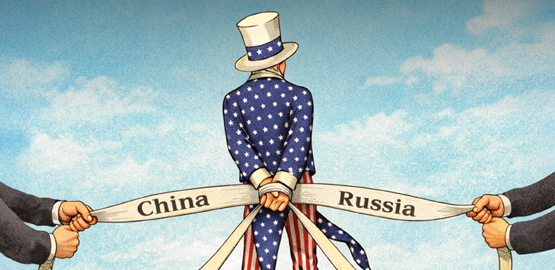
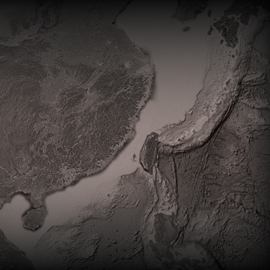
The rise of China has attracted more attention than any of the other of the so-called BRICs. According to the Global Trends 2025 report, “if current trends persist, by 2025 China will have the world’s second-largest economy and will be a leading military power.” The global recession has barely put a dent in China’s ascent. Chinese officials have been at pains to assure one and all that they have no aspirations of hegemony or dominion over other countries. This “charm offensive,” beginning in Southeast Asia but rapidly expanding to Africa and Latin America, has demonstrated China’s ability to wield soft power. But China’s intentions and aims may become more expansive as its power increases. The strong hold of the state on the economy and the patronage relationships that link the party and state to major industries have generated massive waste and inefficiencies in the economy. Rising income inequality and arbitrary abuses of authority have created a combustible mix of socioeconomic tension and unrest. Rising levels of social protest have become an everyday occurrence in China. China’s demography, however, may present the country’s leaders with the most intractable issues of all. In the next decade-and-a-half China’s population will stop growing and begin to decline. The proportion of elderly to working-age individuals will also shift, giving China a so-called “4-2-1″ population structure in which one child will have to support two parents and four grandparents. China’s approaching demographic shifts will also intersect with a growing gender imbalance in the younger age cohorts of its population. The potential for a perfect storm of economic, demographic, and social unrest has led some observers to conjecture that China, far from being a rising power, is actually on the verge of collapse. For the moment, however, the focus remains on a strong China, in particular because its economic advance has enabled it to amass significant and growing military capabilities. Even if China experiences more obstacles to growth than described in Global Trends 2025, it is clear that China will continue to be assertive, but it is hard to know exactly what form that new assertiveness will take. Some suggest that China’s increasing economic and military strength will drive a contest for power in the region and a long-term strategic competition with the United States. Others believe China’s increased interaction with multilateral institutions will help it integrate peacefully into the international system as a responsible stakeholder. Much will depend on the ideas that China’s leadership develops about its global role. The increasing discussion of the “decline” of the United States, and the West more broadly, could have an impact on the attitudes of Chinese leaders and the methods they will employ in accomplishing China’s international objectives.
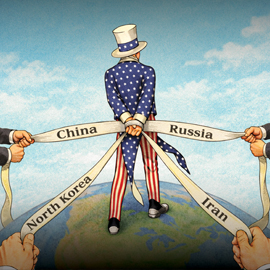
All the countries we have considered have strengths and the potential to increase their power, but all of them are also certain to face serious problems. The period of unipolarity has been based on a singular fact: the United States is the first leading state in modern international history with decisive preponderance in all the underlying components of power: economic, military, technological and geopolitical. With the possible exception of Brazil, all the other powers face serious internal and external security challenges. Japan, with its economic and demographic challenges, must deal with a de facto nuclear-armed, failing state (the DPRK) nearby and must also cast an uneasy glance at a rising China. India has domestic violence, insurgencies in bordering countries (Nepal and Bangladesh) and a persistent security dilemma with respect to China. The demographic challenges will be particularly acute for Europe, Japan, and Russia in the areas of military manpower and economic growth. The results will either diminish overall military strength or, in the case of Russia, impose a greater reliance on nuclear weapons.
With all of the problems and uncertainties that the emerging economies face and the enormous challenges that bedevil the developed world in Europe and Japan, only one thing seems certain: events will drive international economics and politics in directions that no one now anticipates and the certainties about rising and falling powers are likely to be knocked askew by a fickle and unpredictable fate.
As global wealth and power flow to Asia, even if it does not occur as quickly and completely as some boosters maintain, America’s margin of superiority will decline to some degree. Whether the international system moves toward a multipolar world, as forecast by Global Trends 2025, however, will depend to a large degree on how people perceive the relative shifts in power and how they choose to act on those perceptions.
America’s geographic position is fixed and has been a persistent source of strength.