















If the United States accepts the diagnosis of “decline” and seeks to accommodate itself to rising powers, it will likely hasten the timing of that decline and the passing of American primacy. If US leaders choose to continue the path that earlier generations of leaders have blazed in seeking to preserve the US position as the preponderant power, they will have to build on the advantages described above to bolster and extend US predominance.
One measure of the relative standing of nations is to consider the question: “Whose problems would you rather have?” After the survey above, a reasonable person might conclude that, as great as the challenges are for the United States, the other potential powers face even more difficult and intractable problems.
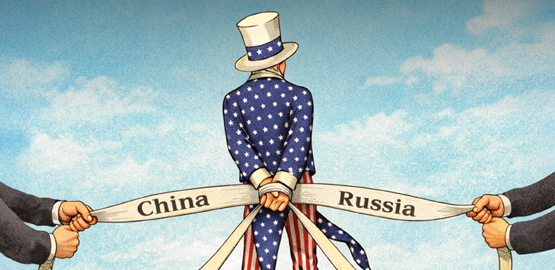
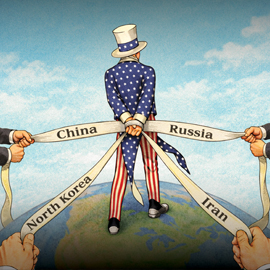
Notwithstanding the prediction of Global Trends 2025 that the world is moving toward multipolarity, it seems likely that US predominance could continue in a unipolar system, albeit one where US hegemony is less clear than it was in the 1990s. In this iteration, however, American primacy will be more constrained by US domestic and international economic limitations and more contested by regional powers. China will pose the biggest challenge in Asia, but potential new nuclear powers like Iran and North Korea will also create difficult questions about US extended deterrence in Northeast Asia and Southwest Asia. Other troublesome challengers may arise, including Venezuela in the Western Hemisphere (particularly if it aligns with a nuclear-armed Iran).
The overwhelming focus on the BRICs in the declinist literature has tended to divert attention from the fact that the proliferation of nuclear weapons has the greatest potential to pose an early challenge to continued US primacy. As Charles Krauthammer has written, “decline is a choice,” and can be avoided if the United States government takes some basic steps. The first is to get America’s house in order. Second, the United States will need to meet the reputational challenges it faces head on. The United States must be prepared to continue to defend the commons. Perhaps most important, the decline in the margin of US dominance and the emergence of challengers at the regional level will make US alliances and alliance management central concerns for US policymakers in a way that they have not been since the end of the Cold War.
Beyond improvements in the management of our traditional treaty-based and informal alliances, the United States needs to look seriously at the shape of its alliance portfolio with an eye to developing relationships with countries that might contribute greater capability and utility than the traditional allies. We have seen that India is perhaps the single most important candidate for partnership or alliance with the United States. In the Western Hemisphere, Brazil may also be able to play a valuable regional stabilizing role in collaboration with the United States. The possibility of avoiding multipolarity or non-polarity clearly exists. It requires resolve to maintain the United States’ role as the “indispensable nation” and a strategy for doing so. At the dawn of the first unipolar era there was an effort at the Pentagon to think explicitly about a strategy for extending US predominance in the international system. Although the document that resulted, the 1992 Defense Planning Guidance, became the subject of much misplaced criticism and controversy, its main outline became the de facto bipartisan strategy that underpinned the unipolar “moment” that, against most expectations, stretched into an era. If the United States is going to successfully manage the challenges of contested primacy, the moment to begin the debate on the strategy that will carry US power forward in the twenty-first century is now.