











China’s Active Defense Strategy and Its Implications PDF Thumbnail

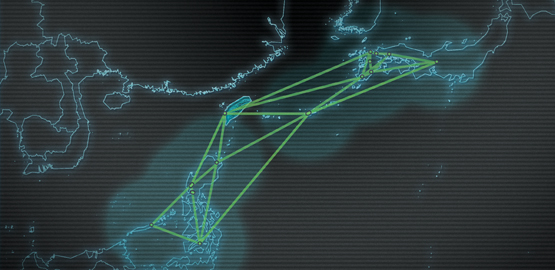
In taking these steps, it will be important to communicate to China that the goal is not to contain, encircle, or threaten its legitimate interests in any way.  These proposed measures would be defensive in nature and pose no threat to a peaceful China. They are instead prudent steps to hedge against further provocations it might pursue.  Developing mini A2/AD postures should be seen as a stabilizing measure to reduce the prospect of any country succeeding in the offensive use of military power to seize or control disputed areas.  One can think of the development of mini A2/AD complexes throughout the region as a loose, inter-locking defensive chain, one that would remain slack in normal times of peace and the absence of threats, but could nevertheless be pulled taut should it be warranted by China’s future behavior. Time, however, is not an ally.  The United States and the countries of Southeast Asia need to take steps now and bolster their defense capabilities to hedge against a more aggressive and expansionist China in the future.

References:


[1] One Chinese estimate suggests the area’s potential oil resources alone could be as high as 213 billion barrels of oil (bbl). An estimate by the U.S. Geological Survey in the early 1990s found the combined reserves of the SCS at 28 billion bbl. See U.S. Energy Information Administration, “South China Sea: Oil and Natural Gas,” available online at http://www.eia.doe.gov/cabs/South_China_Sea/OilNaturalGas.html

[2] Secretary of State Hillary Rodham Clinton, Press Availability, July 23, 2010, National Convention Center, Hanoi, Vietnam, available online at http://www.america.gov/st/texttrans-english/2010/July/20100723164658su0.4912989.html#ixzz1C6lp9vZe.

[3] Hien Cu–Quang Thuan, “China’s seizure of Vietnamese boats illegal, inhumane act: official,” Thanh Nien, April 4, 2010, available online at http://www.thanhniennews.com/2010/Pages/China-seizure%20of-Vietnamese-boats-illegal-inhumane-act.aspx.

[4] Edward Wong, “Chinese Military Seeks to Extend its Naval Power,” The New York Times, April 23, 2010, available online at http://www.nytimes.com/2010/04/24/world/asia/24navy.html.

[5] John Pomfret, “China Claims ‘Indisputable Sovereignty Over South China Sea,” The Washington Post, July 31, 2010, available online at http://www.washingtonpost.com/wp-dyn/content/article/2010/07/30/AR2010073005664.html.

[6] Professor Carl Thayer, Presentation to the Second International Workshop on the South China Sea, Ho Chi Minh City, Vietnam, November 10-12, 2010, available online at http://www.scribd.com/doc/42830353/Thayer-Recent-Developments-in-the-South-China-Sea-Outline.

[7] Kenji Minemura, “China’s scenario to seize isles in South China Sea,” The Asahi Shimbun, December 31, 2010, available online at http://www.asahi.com/english/TKY201012300112.html.

[8] Thomas L. Friedman, “Containment-Lite,” The New York Times, November 9, 2010, available online at http://www.nytimes.com/2010/11/10/opinion/10friedman.html.