










Publications
"Nobody does defense policy better than CSBA. Their work on strategic and budgetary topics manages to combine first-rate quality and in-depth research with timeliness and accessibility—which is why so many professionals consider their products indispensable." – Gideon Rose, Editor of Foreign Affairs, 2010-2021
Search Publications
Studies
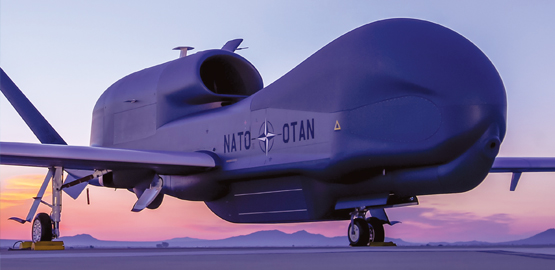
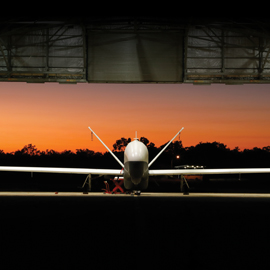
Diamond in the Rough: The Past, Present, and Future of NATO’s ISR Force
NATO is not as prepared as it could be to deter and defeat Russian aggression. Inadequate military surveillance is one major reason why. The Ukraine War has exposed gaps in the alliance’s ISR enterprise. Thankfully, the alliance already has a capability that can anchor the future surveillance network needed to contain Russia: NATO ISR Force (NISRF). The problem is that too few policymakers and experts know about it, so NISRF receives less recognition and investment than it deserves.
Studies
A Navy of Necessity: Ukraine’s Unmanned Surface Vessels at War
Ukraine stood on a strategic precipice in 2022. With its navy eliminated in the first weeks of Russia’s full-scale invasion, Ukraine was left with a shoreline vulnerable to amphibious assault and its vital maritime commerce exposed to interdiction by Russia’s Black Sea Fleet. Yet by mid-2023, Ukraine had forced the Russian navy into a defensive posture and resumed seaborne grain exports.
Studies
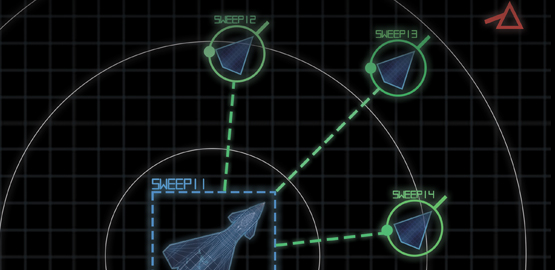
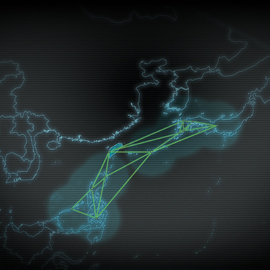
No Dominant Strategy for Air Dominance: Collaborative Combat Aircraft Employment, Basing, and Sortie Generation in a Taiwan Scenario
In 2023, the Air Force unveiled plans to acquire a fleet of autonomous unmanned collaborative combat aircraft (CCA) that would fly under the custody of manned aircraft pilots as loyal wingmen. The Air Force has stressed the CCA’s broad usefulness across diverse missions, including forward sensing, air-to-air attack, and electronic warfare. Despite this emphasis, the fact remains that tradeoffs must be made for any aircraft to excel at a given mission. The CCA is no exception.
Studies
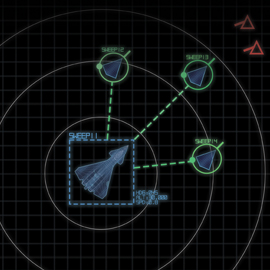
Ready Player None? An End-To-End Assessment of the Air Force Collaborative Combat Aircraft Program
In 2023, the Air Force unveiled plans to acquire a fleet of autonomous unmanned collaborative combat aircraft (CCA) that would fly under the custody of manned aircraft pilots as loyal wingmen and perform forward sensing, air-to-air attack, and electronic warfare. Moving the CCA from promise to reality will require difficult work stretching far into the future. To succeed, the Air Force must start with an honest accounting of what is required and where things stand.
Studies
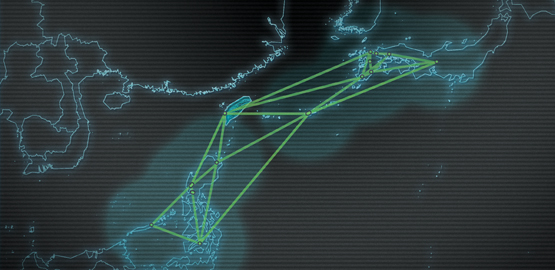
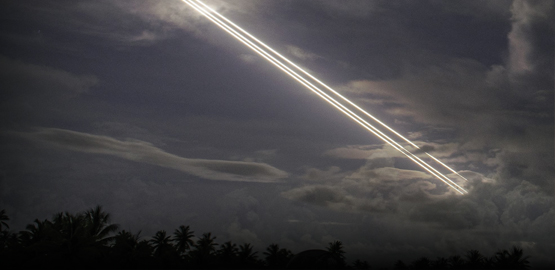
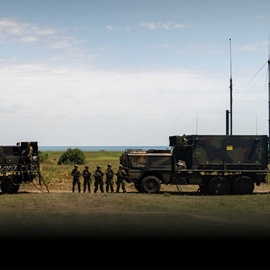
Strengthening the Phalanx: Layered, Comprehensive, and Distributed Air and Missile Defense in the Indo-Pacific
One of the most critical operational challenges the United States is likely to confront in a future conflict, particularly in the Indo-Pacific theater, is the threat of massed precision-guided air and missile attacks on overseas ports, bases, and other vital facilities. DoD has invested significant resources to defend against ballistic missile attacks on the United States, as well as its forward bases and forward-operating forces. However, it cannot still defeat large numbers of ballistic missiles, cruise missiles, and unmanned aerial systems.
Studies
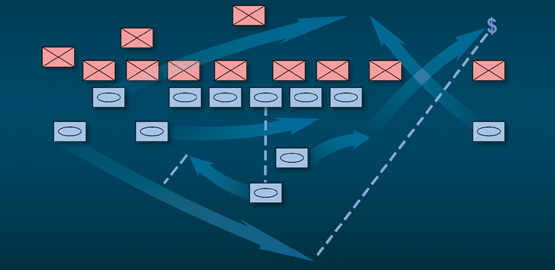
Evaluate Like We Operate: Why DOD Should Evaluate Weapons Systems as Networked Force Packages, Not Individual Platforms
Weapons do not conduct military operations in isolation from one another, and yet the U.S. defense community devotes considerable attention each year to individual platforms. The time spent appraising specific weapons is understandable, given the huge investments and cutthroat politics surrounding these projects, not to mention the defense budget boiling everything down to line items, but is misplaced in a strategic context.